

press agaiN ^

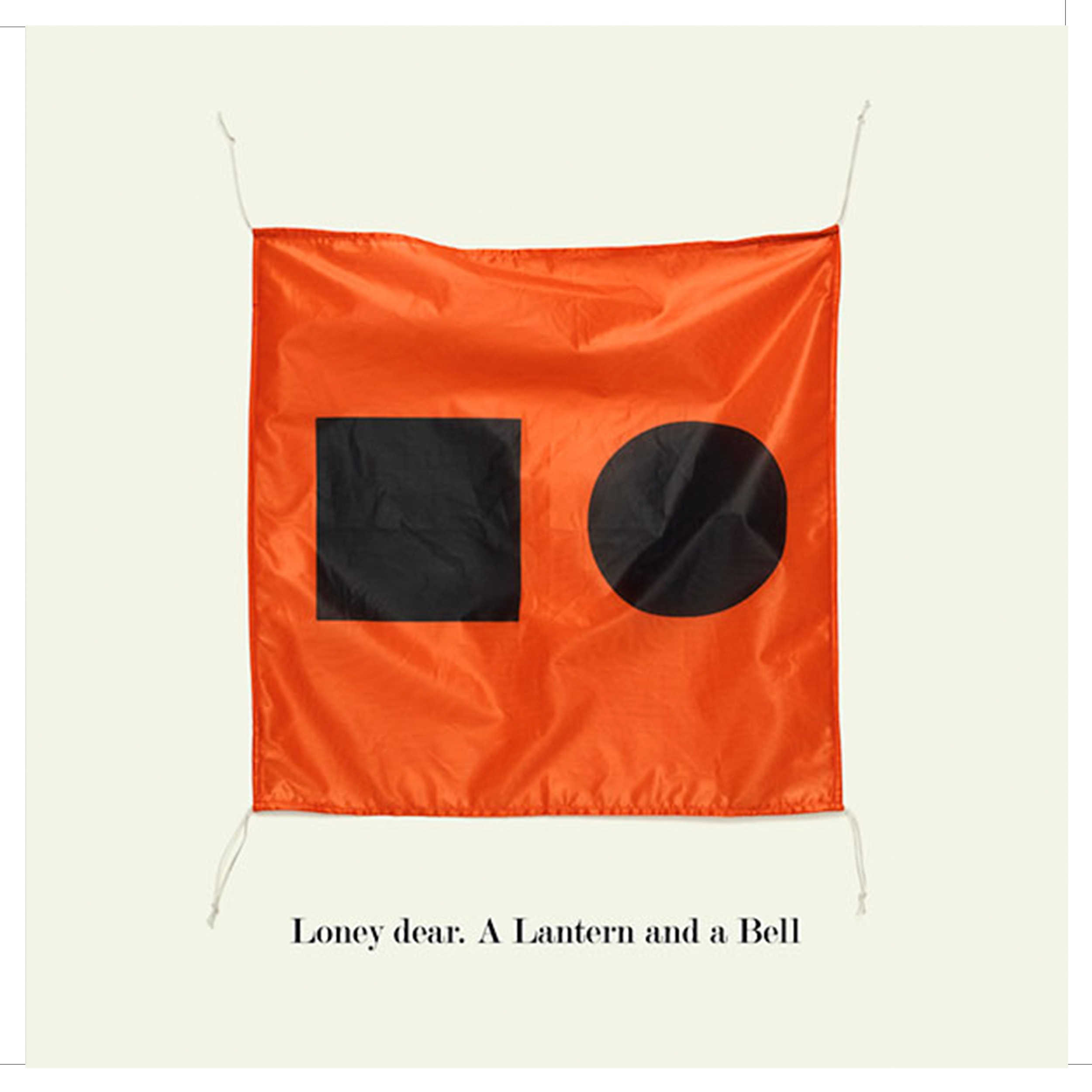
Sologne. French press review

——————–

Loney, Dear’s Got a ‘Fever’ November 6, 2007 Exclusive! Download Loney, Dear’s intoxicating orchestral oeuvre “Le Fever” from their forthcoming release, Sologne. Loney, Dear Swedish one-man band Emil Svanängen, (a.k.a. Loney, Dear) has recorded and produced four full-length albums in his parents’ basement over the last three years, including Sologne which he self-released in Europe in 2006. He also distributed several thousand copies pretty much by himself — not surprising when you consider that Svanängen created the mini-symphony heard on each track of the album, named for a region in Central France, by playing every instrument himself (but his live shows require the services of a five-piece band). “Le Fever” shows this virtuoso at the top of his dreamy-voiced, multi-instrumental game. The aptly named tune is a delirium-inducing lament of lost love, laced with a bossa nova rhythm and a delicate array of brass, chimes and violin. Svanängen is lovely in capturing the desperation left at the end of a relationship and the inability to let go — “I’ve had it till now / I’ve slept on the floor / My hands in despair / Inside misery,” he sings. The beautiful sadness comes to a head when the instruments fall away leaving only Svanängen’s silken thread of vocals and distorted backup rising like mercury through a glass thermometer (think Xiu Xiu or Björk’s “Pagan Poetry”). Despair has never sounded so sweet. Sologne finally arrives stateside Dec. 4 via the Rebel Group. ADELE BALDERSTON

——————–

Pitchfork: 7.6 of 10 Loney, Dear. Sologne Dear John/Rebel Group. Loney, Dear, aka Emil Svanängen, is finally getting a commercial foothold in America. After whetting our appetites with Loney, Noir, his fourth record, he gets a U.S. release for another rustic variation on sugar-sweet Swedish pop, a song cycle named Sologne, France’s pond-mottled approximation of Walden. A sort of refuge from the city, Sologne neatly fits the album’s mood of willful naivete and olden-day romance and dreamy solitude. Thoreau via Sweden via Sub Pop? The welfare state’s Bright Eyes? The formulas come close, but they can’t quite encompass Loney, Dear’s vision of richly layered, souped-up folk. On a mixtape, the Svanängen’s sweet nothings would flow seamlessly into, frankly, anything by their labelmates the Shins. Yet Svanängen isn’t crafting the tender poetry of suburbia. Instead, his album begins in an unabashedly pastoral mode, squeezing the dimensions of a rolling-hills epic into “The Battle of Trinidad and Tobago”, which unfolds, in three-and-a-half minutes, like a cleverly abridged take on “And the Band Played Waltzing Matilda”. Hailing from the countryside of Svanängen’s imagination, “A Band” and the syncopated “Le Fever” have the same rural airs. But even Thoreau slogged back to the metropolis. Svanängen returns for closure. Like one of the high-tech ballads in Belle and Sebastian’s catalog, “The City, The Airport” skips along with the Scots’ trademark blend of energy and ennui, racing below a wilderness of melody. Delicate, always on the verge of shattering, Svanängen’s whisper echoes the trembling falsetto of Stuart Murdoch, when he chants “the city, I don’t want another life that’s killing me,” lingering on the vowels. The smoky sax and flimsy keyboards lend the song body without sacrificing its intimate, homemade feel. In these long goodbyes to urban emptiness, the swell of emotional momentum, as more and more sounds suavely drop into the mix, marks Sologne as a marvel of lo-fi artistry. Obviously Svanängen knows how to mount a crescendo. (Everyone who heard “I Will Call You Lover Again” and “Carrying a Stone” fromLoney, Noir will remember this.) If the closing song “Won’t You Do?” is this record’s soothing denouement, then “I Lose It All” works as the climax, a hunk of ice that snowballs into a hurtling boulder, as pianos tumble upstage, distortion buzzes downstage, snares shuffle, and the whole kitchen sink overthrows an unassuming drums-and-strums arrangement. Track after track, Loney, Dear coaxes drama out of these songlets, trading the spartan rawness of the usual do-it-yourself fare for a brilliantly compact sense of spectacle. He wraps the ups and downs of a whirlwind romance into tiny packages. You’re left hungry, fully certain that 34 minutes– let alone five– will never be enough of this very, very good thing. Roque StrewOctober 24, 2007

——————–

Loney, Dear
Mon, Jan 22, 2007 by Sweet Talk

Emil

Photo by the talented Peter Beste

Loney, Dear is an equisiste addiction. I have been using it as headphone kindling since New Year’s Eve. While some may coin Emil Svanangen’s baklava layered master work as a cold fusion of Belle & Sebastian and Kelley Stultz with a side of Swedish meatball, this is selling his joyous confessional short. Pile on the merits; they are all deserved.

Here is what I scribbled on the back of my drink coaster, after accidentally falling into a vat of dirty martinis on a tuesday night: “I Am John” is basement pop perfection. Somewhere far, far away, Brain Wilson’s muse and Barry Gibb’s Voice coach are jealous. If I had this track in my eight-track quiver during my first co-ed slumber party I would have been much luckier. If only sucking helium could make me sound that good. The first great close eyes, shake head and smile song of 2007. I wonder if the waitress will notice if I pilfer an extra clip of olives.

Album comes out Feb.6 but check out “I Am John”, the best song performed at CMJ this year by far: I AM JOHN

——————–

Article written by James G Jul 25, 2007.
‘Saturday Waits’ is a veritable steamtrain journey of a song. It chugs along on gentle indietracks of high pitch vocal and acoustic guitar, puffing out clouds of Beatlesesque tubasmoke along the way. ‘Delightful’ was the word a pal used to describe this, and I’m inclined to agree with him. ‘I Do What I Can’ is the flip, and is more of a trip up an escalator, and Paul Simon is brought to mind in places. I suspect this may be Stockholm based Loney, Dear at their (his?) most rocky, yet is still as gentle as you like. Nice.

——————–

channel4.com fancy_a_spot_of_dogging
As well as having dogs dressed as people (still funny) the song really is a bit good. Oh, and Loney, Dear is a man from Sweden, in case you were wondering, which is very likely since he has sold about 19 records in the UK so far. Videos like this ought to turn that around though… NB. We are quite annoyed that Loney, Dear is not from Denmark. If he was we could have used the moderately entertaining ‘great dane’ headline we came up with.

——————–

A longing The Mamas and the Pappas vocal drag is provided by courtesy of Swede Emile Svanangen AKA Loney, Dear, whose worrisome but strangely calming vocals bob up and down on the acoustic ripples and background fuzz, for an extended moment of stock-taking. Now on his fourth album, Svanangen creates calm, as he renews his reputation for being personable, yet distant. This single forms part of the foraging Loney, Noir album that has taken a few acoustic connoisseurs by surprise. Something that is not easy for an artist of this ilk to do these days.

Angryape.com

——————–

DN
Artist: Loney Dear
Titel: “Loney, noir”
Skivbolag: (Parlophone/EMI)

I snabb fart gav Emil Svanängen ut fyra album under namnet Loney, Dear. Han brände ner dem själv och stoppade i egentillverkade pappomslag. Ett av dem hann han till och med göra om, i en “redux”-version. Han sa sig vilja hålla på så där ett tag, för att bli tillräckligt säker innan det blev dags att ge sig in i den reguljära musikbranschen. Men nu ges – som hans andra utgåva på ett etablerat skivbolag – ännu ett av de där fyra albumen ut “på riktigt” och nyproduktionen tycks vara satt på undantag.
Att musikbranschen befinner sig i gungning är knappast någon nyhet, men att just de här två svenska popmakarna har tagit ovanliga vägar dit har sannolikt med andra faktorer att göra. De är solitärer, kunde lika gärna ha kommit fram i en annan era – och låtit exakt likadant. Ändå är det svårt att inte notera likheterna dem emellan.
Nu sägs det att skivbranschens älskade albumformat är slut, att det numera bara handlar om enstaka låtar som folk tankar ner i sina spelare. Men Loney, Dear håller på integriteten i sina album. De är inte långa, de skulle lätt kunna kombineras i andra mönster, men det är inte så han vill ha det. Med små modifikationer bevarar han sina album som intakta enheter, tio låtar som binds ihop av inbördes logik, där de flesta i samma situation skulle ha plockat ihop ett nytt urval till varje ny release.

Montt Mardié väljer i stället att ge ut ett dubbelalbum, trots att den samlade mängden musik bara hamnar på strax över en timme. Hans sätt att tänka är lika konceptuellt, här har han haft en idé om en duettplatta – med gäster som Jens Lekman och Hello Saferide – som får bli cd nummer två, “Pretender”. Med sitt eget omslag och sitt eget cd-häfte. Men första skivan är faktiskt starkare, och gör hans egen identitet tydligare. Men båda sidorna ska med. Eller, ja, det är ju fler sidor än så. Här finns såväl storbandsjazz som en plötslig låt på svenska (“När vapnet får styra”), men genom allt hör man samma tilltal. Som gör att alltsammans spretar mindre än det egentligen borde. Antagligen är man helt fel ute om man försöker få dessa säregna individualister att representera någon strömning i tiden. Men det är likafullt ett hälsotecken att de dyker upp just i Sverige, och just nu. Nils Hansson
——————–
thermusic.com: Of course this is on Sub Pop. I can’t think of another record that so perfectly captures the winsome vaguely-twee, sugary, acousti-pop energy of Seattle’s finest label, so much as Loney, Dear’s Loney, Noir. One memorable hook after another, even the Shins’ last record doesn’t quite “out-pop” Loney’s hailstorm of glockenspiels and vintage keyboards and saxophones, and blissfully unapologetic nasal vocals. In fact, this little unassuming album so damned perfectly captures the whole “indie” zeitgeist I’m surprised it doesn’t come with a deluxe edition pre-packaged with a cardigan sweater and horn-rimmed glasses. So who is Loney, Dear? It’s not the finest name I’ve ever heard, but the gorgeous one part My Bloody Valentine one part Belle and Sebastian 30 second opening of “Sinister in a State of Hope” had me all but forgetting this band was dubbed after a made-up English word too closely resembling “lonely.” Loney, Dear is really just the tag that Swedish multi-instrumentalist/songwriter extraordinaire, Emil Svanangen, records under. Apparently, the guy’s self-released three previous Loney efforts on his own, and if they are anywhere near as close to capturing the joyous panoramic pop of this Sub Pop debut, I’m sure they are well worth tracking down. Much like Svanangen’s aforementioned Billboard-topping lablemates, the Shins, Loney’s hooks are disarmingly resilient — they are at once immediately satisfying, and yet they don’t seem to go stale. Maybe it’s because Svanangen is such a talented instrumentalist injecting his songs with everything from tubas, to handclaps, to optigan, or maybe it’s just cause he’s from Sweden. Either way, Lonely, Noir is one hell of an addition to Sub Pop’s new breed. [HG]

——————–

Loney, Dear op Pukkelpop: Veelgelaagde ontdekking

Live he had four bandmembers with him who gave us a multi-layered sound. With many quiet and louder moments the songs gave the whole concert an enourmous dynamic feeling. Sad thing was that many members of the public talked loudly during the quieter moments, but still everyone was impressed when music grew to a climax. Who was there became a fan of Loney, dear – immediately. The discovery of the festival.”

——————–

Loney, Dear – Saturday Waits (Regal) Just what is it about Swedish music? How does it remain so consistently lovely, and more to the point, so damn good? The latest Swede to soothe our non-Scandinavian ears, and probably the word of mouth success of 2007, Emil Svanängen – or to give him his confusingly punctuated pseudonym, Loney, Dear – returns with ‘Saturday Waits’, the second single from the much-lauded ‘Loney, Noir’ album.

‘Saturday Waits’ contains everything that has marked Loney, Dear out for praise, most notably the combination of sunshine pop melodies painted on a gentle summer canvas with a lo-fi folk brush. As with many of the songs on ‘Loney, Noir’, it starts off fairly quietly before adding layers and layers of colours, hitting its peak with the Beach Boys harmonies of its chorus. Buried beneath these layers is a poignant tale of isolation that Svanängen brings to life and turn into a joyously uplifting three and a half minutes of glorious indie pop.

There is more joy to be had on the flip side of the single – if the Flaming Lips decided to pack in all ideas of giant concept albums and songs that explode to the very edge of pop reason and recorded an album of 4/4 summer pop songs it would probably sound a bit like ‘I Do What I Can’. Moreoever, if Belle and Sebastian or the Magic Numbers lived in Sweden , they might just make music as effortlessly cool as this. ‘Saturday Waits’ is yet another song that makes you want to give it all up and move there – sooner or later we might just all do it.

——————–

From The Sunday Times July 22, 2007 Mark Edwards
The intriguingly spelt and irritatingly punctuated Loney, Dear has been one of the best musical finds of this year. You could have found him before, but you would have had to look hard. Loney, Dear is the alter ego of the Swedish singer-songwriter and home-recording genius Emil Svanangen, who self-released his first album, The Year of River Fontana, in 2003; but unless you were his friend, or a friend of a friend, you were unlikely to join his tightly formed fan base back then. The American label Sub Pop signed him after he appeared at last year’s SXSW festival, in Austin, Texas, and rereleased his fourth album, Loney, Noir. When it came out over here, on Regal this April, it met with universal critical acclaim. Since then, Svanangen, who spent much of the previous four years sitting with his headphones on in tiny apartments, has found the consequences of his sudden wider exposure – putting a proper band together, touring, promotional duties – a bit of a culture shock. “Too much is happening now,” he says. “More than I want, because I’m really about recording and making music. I love to sit on my own . . . and add things, and subtract things.” Presumably, it’s this sort of happily reclusive existence that the band name is supposed to evoke? “Oh, exactly.” Svanangen has been obsessed with music for a long time. At five, he was learning piano; by the age of eight, he had added clarinet. But what he really wanted was a synthesizer. “I froze when I first saw a synthesizer on TV. I can still appreciate how modern it seemed in those days.” In his mid-teens, however, Svanangen switched allegiance from high-tech modernity to more traditional fare. He started playing acoustic guitar and “not very hip Christian folk music”. At 18, he zigzagged again and formed a jazz piano trio. “I know it sounds like I kept changing direction, but when I look back on it, it seems like a straight line to me – every piece of music I make, I can trace back to one of these different phases.” Svanangen might be able to, but you almost certainly won’t be. You will hear sweet West Coast pop melodies, gentle alt-folk arrangements and sudden, Arcade Fire-style rushes of musical energy; and you’ll hear Svanangen’s thin, high voice, clear and distinct, over gorgeously layered musical backings that genuinely invite comparison with the work of Brian Wilson. The point at which songwriting and arranging and recording blur into one is the point at which Svanangen comes into his own. “It took me a long time to get into multi-track recording,” he says, “but when I finally did, it was a big turning point in my life.” Svanangen finally acquired the means to multi-track in 2001, when the Swedish government decided to sell computers at a discount. A friend supplied some cheap eastern European music software. “I got used to working really fast, because I never knew if the computer was going to start up again the next day,” Svanangen remembers. He was finally in his element, constructing intricate musical structures, the kind where you can’t quite work out what instrument is playing what part, where many apparently simple elements suddenly combine into something truly special. “I like the magical things that happen in music,” he says, “the things you can’t explain.” Svanangen sold his own CDs via his website, and found that he could make a living from his music thanks to a small but enthusiastic fan base. “I didn’t do much promotion. It spread by word of mouth. People would tell me what they thought of the songs, and I used their feedback to develop. I changed things around if people didn’t like them, or if there was a song I didn’t hear anything back about at all, I’d drop it completely.” It’s hard to believe Svanangen would get anything but positive feedback for the songs on Loney, Noir: songs such as the floating Sinister in a State of Hope, with its delicate guitar lines and hopeful vocals, or the urgent I Am John, about someone who is “never gonna let you down”, but always does. Ironically, his new-found fame means Svanangen is spending more time than ever burning his self-made CDs, folding covers and putting them in the post, as increasing numbers of people fall in love with Loney, Noir and decide to explore his earlier work. He is staying humble. “I still really appreciate sitting at home, folding CD covers,” he says. Then he has a rethink. “Actually, maybe after a couple more months, that will be enough.”

——————–

Loney, dear. – Loney Noir (Regal). 5/5

Since releasing his major-label debut, Sologne, back in 2006, Loney, dear. (aka Swedish poly-instrumentalist and ‘home-recording phenomenon’ Emil Svanängen) has been hailed by the British music press as one of the most talented and engaging new artists around. On the basis of second album Loney Noir, that burgeoning reputation is well-deserved. After the first listen to its ten examples of dreamy, understated folk-pop, Loney Noir already feels like an old favourite, reminiscent of the best work of Belle and Sebastian and the Flaming Lips. ‘I am John’ is the first single, and the most obviously catchy song here, but the whole album is instantly appealing and recorded to much the same standard. It is heart-warming to find an album of such high quality, particular one that sustains interest without recourse to the ridiculous, clichéd pomposity of so many of its peers. Hopefully, Loney Noir will finally grant Svanangen the public acclaim he so obviously deserves. It is a sonic treat. Oliver J. Dimsdale

——————–

Sub Pop’s latest release comes in the form of an offering from Sweden’s Emil Svanängen, one of those “I’ve never been in a relationship but damnit if I’m not lovesick” guys who writes and records prolifically while seated on the edge of a rumpled bed in his small apartment. His last three records saw distribution out of that same apartment, folded into envelopes by Svanängen himself. Sub Pop A&R discovered him at SXSW, where bedroom pop stars flock each year as if to Mecca. Recording under the moniker Loney, Dear as opposed to his given name — pronunciation is key to marketability, after all — Svanängen’s Sub Pop debut, Loney, Noir , announces his monikered self as a more Northern, and therefore more mystical, Sufjan Stevens. (Come to think of it, maybe pronunciation isn’t that important. Right, Soof-yan?) Where Sufjan and company focus on narrative storytelling, Loney, Noir deals with a more confessional approach to the emotions accompanying the ends and beginnings of relationships: all that standard fodder for orchestral singer-songwriter composing. From even farther north than the upper peninsula, Svanängen’s Scandanavian accent and layered vocals give Loney, Noir a magical, Aurora Borealis-ish effect. With layers and layers of soothing texture crescendo-ing atop one another, Loney, Dear’s soft melodies get echoed and inverted by oboes, flutes, piano, strings, electronics, saxophone, etc to create one giant cacophony that conjures dancing on a cloud or the soundtrack to a film about Tinkerbell’s favorite flowers.
That being said, the music does not relegate itself to cutesy dream-pop. Rather, this fits firmly in the “elegant” adjectival category. “I Am John,” the first single, starts with the quiet announcement “Johnny and I got lost tonight, we got carried away,” and from there the orchestral army slowly joins in around Svanängen’s rhythmic vocals, carrying him, quite literally, away into a falsetto-ridden glockenspial-driven arena rock ending.
Catchy and fetching, Svanängen’s Loney, Dear is sure to be a huge hit when this record hits shelves on February 6. Closing my eyes now and pressing play for “Saturday Waits,” I see Emil Svanängen seated on the edge of his bed Sweden. There’s an acoustic guitar on his lap, and he’s beginning to play and sing quietly: “You sit in your room, looking over the sea, you’ve got friends over here…” — and as he does, a giant multi-colored rose blossoms forth from the sound hole. It’s like a pedaled firework from which horns blast, glockenspiels hammer, and a choir of other Svanängens emerges; then we all float away in white angelic robes, the apartment disappearing around us until it is just us following the singer, sailing through a pink and blue sky on a dense carpet of melodic joyfulness. The image could apply to every song on Loney, Noir. Each track pours out of the speakers like a warm blanket wrapping around shivering shoulders. Elaborate metaphors aside, let me only say: Thank you, Sweden. Between Loney, Dear and my bookshelves, you’ve given me so much goodness.

- Joseph Riippi, January 30, 2007 threeimaginarygirls.com

——————–

#5: Loney, Dear – Loney, Noir

Serving as a pseudonym for Swedish singer-songwriter and multi-
instrumentalist Emil Svanangen (Note: There is an accent mark
somewhere in his last name), Loney, Dear is a melodic glance into
passion, love, and melancholy harmonies. Loney, Noir is the first
American release for Loney, Dear, but it has rapidly made a huge
impact on indie music reviewers. Needless to say, Emil Svanangen’s
talent is not being overlooked in the United States. I don’t know what happens when I listen to songs like “Sinister in a State of Hope” or “I Am John.” It’s almost as if I get swept away to a mysterious land of delicate music, so fragile that it could break at any second. Trust me, this music is incredible. If the #5 ranking isn’t proof enough, review the scenario that I colored in the aforementioned sentence. I never talk like that. No joke – that is really the effect that this album has on me. Everyone is always looking for unknown acts these days. Well, here you go. This one has barely even peeked its head out of a Swedish cave. Grab a hold of this now and cherish it while you can. If you need a quick comparison of how I would relate Loney, Dear’s music to
someone more familiar, I would have to refer to the illustrious
Sufjan Stevens. Yes, Loney, Dear is that good.

Posted by Logan Lenz

My first love was Loney, Dear. It’s become my new uber-comfort music, and I believe I reviewed one of the tracks as sounding like “Nintendo hiring George Martin to produce the soundtrack to Metroid.” Kinda like a dream come true. Recently signed to the recharged, mythical SubPop – and so much dreamier than The Shins could ever be. (Don’t kill me!)Posted by Adam King

————–

A longing The Mamas and the Pappas vocal drag is provided by courtesy of Swede Emile Svanangen, whose worrisome but strangely calming vocals bob up and down on the acoustic ripples and background fuzz, for an extended moment of stock-taking. Now on his fourth album, Svanangen creates calm, as he renews his reputation for being personable, yet distant. This single forms part of the foraging Loney, Noir album that has taken a few acoustic connoisseurs by surprise. Something that is not easy for an artist of this ilk to do these days.

by Dave Adair

——————–

Album: Loney, Dear – Loney, Noir
By Ed Martland

Loney, Dear’s album begins like Sigur Rós (with whom they share nationality), most especially in the singer’s frail, elf-like voice. It could actually be Sigur Rós’s singer in fact, and the song’s arrangement, laced with atmospheric keyboards and horns, only adds to the effect. All of this turns out to be a bit of wrong-footing on the band’s part though, as the second song brings in a train-like rhythm, building into a racing upbeat pop-eruption albeit still with the singer-from-Sigur-Rós vocals. In fact it proves to be one of the album’s highlights, and is unsurprisingly also the lead-off single. Musically the band never stays long in traditional guitar-drums-bass territory, working in choirs, massed handclaps, minimalist Kraftwerk electronics, a harmonium’s drone and so on. At times these exotic sounds edge them again into post-rock territory, that epic sweep bleeding into the mix on waves of horns and strings. It makes for a strange combination with the lyrics, given the usually impenetrable nature of the elder group.
Taken as a whole the album is a little disjointed, with only the distinctive voice to hold together several different styles. There are some wonderful moments, such as the single “I Am Jack” and “No-One Can Win”, but the feeling that you could be listening to Sigur Rós instead is never far away. Worth hearing if you wish that band had been a pop group instead.

More press —>